The best way to prepare scrap copper for recycling is to sort it by type, separate copper from other metals and non-metal materials, keep different grades apart, and avoid unsafe processing methods. You do not need to make every piece perfectly clean before taking it to a recycler.
Good preparation makes the material easier to assess and can help ensure that different copper grades are not unnecessarily mixed together. It also makes transport, weighing and handling more efficient.
Whether you have copper wire from an electrical job, old plumbing pipe, copper offcuts or mixed copper scrap, a few simple preparation steps can make a significant difference.
Why Should You Prepare Scrap Copper Before Recycling?
Copper is highly recyclable and can be recovered from many different products, including electrical wiring, plumbing components, appliances and industrial materials.
However, not all copper scrap is the same.
A clean piece of bare copper wire has different characteristics from insulated cable, painted copper, soldered pipe or copper mixed with other metals.
Recyclers assess scrap according to factors such as copper content, cleanliness, form, contamination and grade. Separating materials before delivery gives the recycler a clearer picture of what you have.
Quick takeaway
Sort first, separate obvious contaminants, keep different copper types apart, and let the recycler handle specialised processing when needed.
Step 1: Identify the Copper You Have
Start by looking through your scrap and identifying the main types.
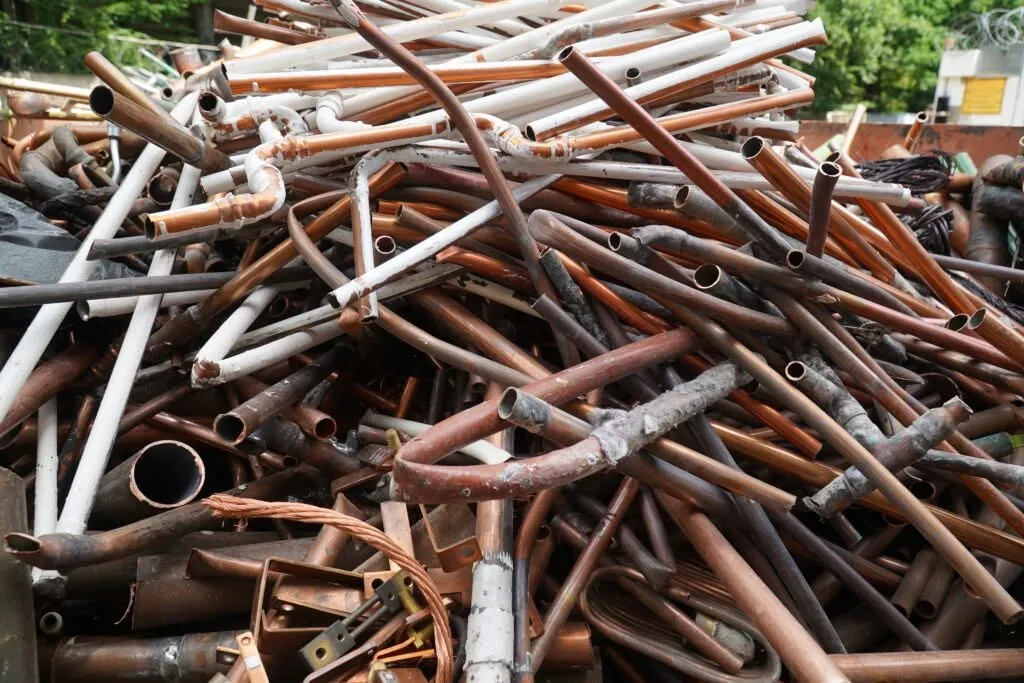
Common copper scrap includes:
| Type of copper scrap | Examples | Preparation approach |
| Bare copper wire | Stripped electrical wire | Keep clean and separate |
| Insulated copper wire | Electrical cables and wiring | Keep insulation intact unless safely removable |
| Copper pipe | Plumbing pipe and tubing | Separate from other metals |
| Copper sheet/offcuts | Fabrication and construction leftovers | Keep separate where practical |
| Copper fittings | Plumbing components | Separate from mixed metals |
| Copper-containing equipment | Motors, appliances and components | Professional dismantling may be preferable |
The exact classification used by a recycler can vary, so do not assume that every piece belongs in the same grade.
If you are unsure about a particular item, keeping it separate and asking the recycler is better than guessing.
For plumbers and renovators, copper pipe recycling services can provide a dedicated route for old and surplus copper pipe.
Step 2: Separate Copper From Other Metals
One of the most useful preparation steps is separating copper from materials that are clearly different.
For example, keep copper pipe separate from:
- Brass fittings
- Aluminium
- Steel
- Stainless steel
- Plastic
- General rubbish
- Electronic waste
This does not mean you need to dismantle every complex item yourself.
If a component contains multiple materials that are difficult or unsafe to separate, leave it intact and ask the recycler how they want it presented.
Why separation matters
Mixed materials can require additional processing.
Keeping obvious copper scrap together and other metals in separate piles makes the material easier to identify and assess.
Step 3: Sort Bare Copper Wire Separately
Bare copper wire should not automatically be mixed with insulated cable.
Bare wire has already had its insulation removed, while insulated copper wire contains both copper and a non-metal covering.
The copper content and condition of insulated cable can vary considerably.
Safari Copper Recycling handles both copper wire and insulated copper wire through dedicated recycling services. Its copper wire service explains that wire is sorted by grade and that insulation removal is part of professional processing.
If you have a large quantity of cable, keep the different types separate rather than combining everything into one pile.
Step 4: Be Careful With Insulated Copper Wire
Insulated copper wire is still valuable recyclable material.
However, removing the insulation is not always the best preparation method for every person or every type of cable.
The potential benefit depends on the cable type, copper content, quantity and the time or equipment required to process it.
Safari Copper Recycling processes a range of insulated copper wire, including different cable types, using sorting and specialised separation methods.
A safer approach
If you do not have the correct equipment or experience, do not burn insulation or use unsafe methods to remove it.
Burning cable can release harmful fumes and is not an appropriate recycling preparation method.
For larger quantities, ask a professional copper recycler whether the cable should be supplied insulated.
Step 5: Remove Obvious Non-Metal Contamination
Before taking your scrap to a recycler, remove loose rubbish that can be separated easily.
Examples include:
- Plastic packaging
- Cardboard
- Tape
- Loose dirt
- Unrelated household waste
- Large pieces of insulation
You do not need to make every piece spotless.
The objective is to prevent obvious rubbish from becoming mixed with valuable recyclable material.
For example, a pile of copper pipe with loose plastic packaging mixed through it is less organised than a separate pile of copper pipe.
Step 6: Do Not Automatically Remove Every Fitting or Solder Joint
This is where preparation can become unnecessarily complicated.
Copper pipe may contain solder, fittings or other attached materials.
You may be able to remove some obvious attachments safely, but there is no need to dismantle every component simply to prepare it for recycling.
The final classification depends on the material’s actual condition.
If removing a fitting requires aggressive cutting, heating or specialist tools, it may be better to leave the material intact and ask the recycler.
Good preparation should improve the material without creating unnecessary safety risks.
Step 7: Keep Different Grades Separate
One of the easiest mistakes is putting every copper item into one container.
Instead, create simple groups such as:
Group 1: Clean bare copper
Keep clean, uncoated copper wire and other high-quality material together where appropriate.
Group 2: Copper pipe
Keep copper tubing and pipe separate from wire.
Group 3: Insulated copper wire
Keep cables with insulation separate from bare copper.
Group 4: Mixed or contaminated copper
Keep painted, heavily oxidised, soldered or mixed-material pieces separate when practical.
You do not need to determine the official grade yourself.
A recycler can assess the material and determine the appropriate category.
Step 8: Check for Other Valuable Metals
A renovation or demolition pile may contain more than copper.
You might also find:
- Brass
- Aluminium
- Stainless steel
- Electric motors
- Radiators
- Batteries
- Aluminium-copper components
Do not automatically throw these materials into the copper pile.
Safari Copper Recycling provides recycling services for several of these material categories, including brass, aluminium, stainless steel, batteries, motors and aluminium-copper radiators.
Separating them can make your entire scrap collection easier to assess.
Step 9: Prepare Copper for Safe Transport
Once your scrap is sorted, think about how you will transport it.
Copper pipe can have sharp edges.
Wire can become tangled.
Small copper pieces can spill from open containers.
Use sturdy boxes, tubs, bags or other suitable containers that can safely hold the material.
Do not overload containers beyond what you can safely lift or transport.
For commercial quantities, ask the recycler whether collection or other handling arrangements are available.
What Should You NOT Do With Scrap Copper?
Preparing scrap copper does not mean dismantling everything yourself.
Avoid:
- Burning wire insulation
- Using hazardous chemicals to clean copper
- Cutting unfamiliar electrical equipment without proper knowledge
- Dismantling appliances that may contain hazardous substances
- Handling batteries carelessly
- Mixing potentially hazardous materials with ordinary copper scrap
Some equipment requires specialised handling.
For example, air-conditioning and refrigeration equipment can contain refrigerants that require proper recovery before recycling. Safari’s existing content also highlights this distinction for old air conditioners and refrigeration units.
When in doubt, leave the item intact and ask a professional recycler.
Should You Clean Scrap Copper Before Recycling?
Basic cleaning and separation can help, but you do not need to make scrap copper look brand new.
Remove obvious loose contamination where practical.
Do not use harsh chemicals or complicated cleaning processes simply to change the appearance of the metal.
The recycler will assess the material based on its actual condition and composition.
The most useful preparation is usually sorting rather than polishing.
Does Stripping Copper Wire Always Increase Its Value?
Not necessarily.
Stripping insulation changes the material category, but the financial benefit depends on the quantity, cable type, copper content and the time required to remove the insulation.
Safari Copper Recycling’s existing guide on stripping copper cable notes that the economics can vary depending on the material and the amount of work involved.
For small quantities, manually stripping cable may take more time than expected.
For larger quantities, specialised processing can be more efficient.
Practical rule
Never assume that stripping is automatically the most profitable option. Ask your recycler how they value the cable in its current form.
A Simple Scrap Copper Preparation Checklist
Before taking your copper to a recycler, use this checklist:
Separate copper from general rubbish.
☐ Keep bare copper wire separate from insulated cable.
☐ Separate copper pipe from brass and other metals.
☐ Remove obvious loose plastic, cardboard and packaging.
☐ Keep different material types in separate containers.
☐ Do not burn insulation.
☐ Avoid unsafe dismantling or chemical cleaning.
☐ Check whether unusual items require specialist handling.
☐ Pack sharp or loose materials safely.
☐ Ask the recycler about uncertain or mixed materials.
This approach keeps preparation simple without creating unnecessary work.
How Does a Recycler Assess Prepared Copper?
A recycler will typically look at the material’s characteristics rather than simply treating every copper item as identical.
Important factors can include:
Copper content: How much of the material is actually copper?
Condition: Is it clean, coated, oxidised or contaminated?
Form: Is it wire, pipe, sheet, granules or mixed material?
Attached materials: Does it contain insulation, solder, fittings or other metals?
Quantity: How much material is being presented?
These factors help determine how the material can be processed and classified.
Why Recycle Copper Instead of Throwing It Away?
Copper has a strong recycling advantage because it can be recovered and used again.
Recycling helps keep valuable metal in circulation instead of sending it to landfill.
It also reduces the need to obtain all copper from newly mined resources.
Industry sources note that recycled copper can retain the material’s useful properties, making it suitable for continued use in manufacturing and other applications.
For businesses and tradespeople, recycling also provides a practical way to manage accumulated metal offcuts from construction, electrical and plumbing work.
Where Can You Recycle Scrap Copper in Sydney?
If you have sorted copper wire, pipes, insulated cables or other copper-bearing materials, Safari Copper Recycling provides dedicated copper recycling services in Sydney.
The company handles copper pipes, copper wire, insulated copper wire and other scrap-metal categories.
If you are unsure how to classify your material, it is better to ask before separating or processing it further.
For enquiries or a quote, contact Safari Copper Recycling on 0414 014 020.
Have a pile of copper scrap ready to recycle?
Sort it, bring it in and turn unused copper into value. Call Safari Copper Recycling today.
What Happens to Copper After You Recycle It?
After collection and sorting, recyclable copper can go through processing designed to separate it from insulation, contaminants and other materials.
For insulated copper wire, specialised equipment can separate the copper from the insulation.
For copper pipe, the material can be sorted and prepared for further processing.
Safari Copper Recycling describes sorting, preparation, processing and reintegration as part of its copper recycling approach.
The recovered copper can then re-enter manufacturing supply chains instead of becoming waste.
FAQs
How do I prepare copper for recycling?
Sort the copper by type, separate obvious contaminants and keep bare wire, insulated cable and copper pipe apart. Avoid unsafe processing methods and ask the recycler about uncertain materials.
Do I need to strip copper wire before recycling?
No. Insulated copper wire can still be recycled. Whether stripping is worthwhile depends on the cable type, quantity, copper content, equipment and labour involved.
Should copper pipes be cleaned before recycling?
Remove obvious loose contamination where practical, but extensive chemical cleaning is generally unnecessary. The recycler can assess the pipe based on its condition.
Can I recycle copper with brass fittings attached?
Yes, but keeping different metals separate where practical can make assessment easier. If removing the fitting requires unsafe tools or methods, leave it attached and ask the recycler.
Can I burn copper wire to remove insulation?
No. Burning insulation can release harmful fumes and is not a safe preparation method. Use appropriate mechanical processing or allow a professional recycler to process insulated cable.
What types of copper can be recycled?
Common recyclable materials include copper wire, insulated copper wire, copper pipes, tubing, offcuts and copper-containing components. The accepted materials and grading should be confirmed with your recycler.
Is clean copper worth more than mixed copper?
The value can differ because copper grade, purity, condition and contamination affect how material is assessed. Keep clearly different types separate rather than assuming they have the same value.
Where can I recycle copper in Sydney?
Safari Copper Recycling provides copper recycling services for materials including copper pipe, copper wire and insulated copper wire. Contact the team on 0414 014 020 to discuss your scrap.
Preparing scrap copper for recycling does not have to be complicated. The most important steps are sorting, separating and safe handling.
Keep bare copper, insulated wire, copper pipe and other metals in separate groups where practical.
Remove obvious loose contamination, but avoid unnecessary chemical cleaning or unsafe dismantling.
Most importantly, do not assume you need to process everything yourself. A professional copper recycler can assess mixed or difficult materials and advise you on the best way to present them.
If you have copper offcuts from plumbing, electrical work, renovation or commercial operations, contact Safari Copper Recycling on 0414 014 020 to discuss your recycling options.